A Practical Guide to Choosing Between Organic Search and Paid Search
SEO and PPC solve different problems, so the “better” option depends on how quickly you need enquiries, what a new customer is worth to you, and how competitive your market is. SEO builds lasting visibility, but it takes months to show results. PPC puts you in front of customers within days, but it disappears the moment you stop paying. Many businesses get the best of both by running them side by side rather than picking one and ignoring the other.
Why Does the SEO vs PPC Question Trip Up So Many Business Owners?
If you have spent any time searching “SEO vs PPC”, you have probably landed on a dozen articles that all conclude with “it depends”. They leave you no closer to an answer, which is frustrating when you are trying to decide where your marketing budget goes this quarter. The honest answer is that it genuinely does depend, but on specific, answerable things rather than vague generalities.
Your market, your competition, your budget, the value of a single customer to your business, and how quickly you need the phone to ring all point toward one channel or the other, sometimes both. This guide walks through exactly what those factors are, so by the end, you will have a clearer view of where your money should go, not just another shrug.
What Is SEO and How Does It Actually Work?
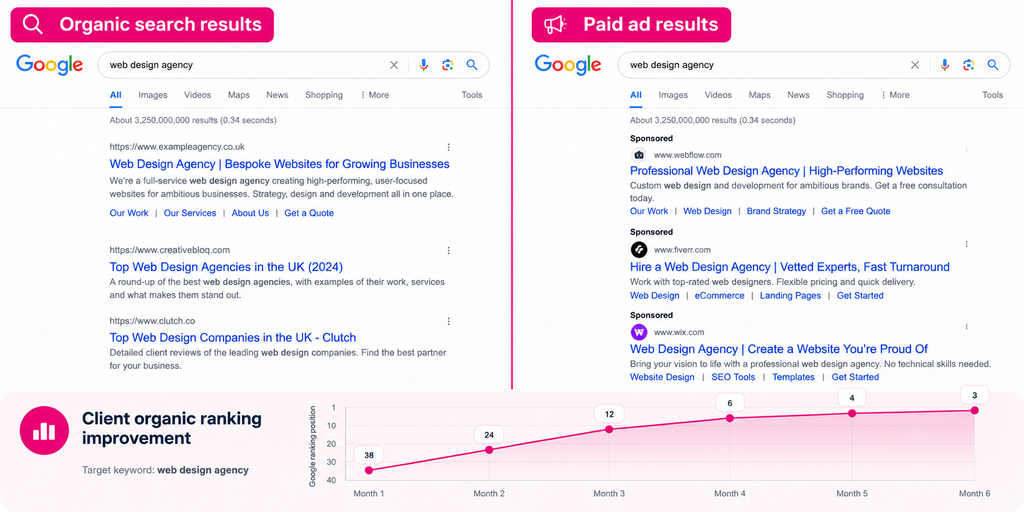
SEO is short for search engine optimisation, and it means improving your website and wider online presence, so your business has a better chance of appearing in the unpaid, organic results on Google. Nobody pays for that spot directly. You earn it through relevance, trust and technical groundwork.
Ranking organically for a competitive term rarely happens by accident; it takes deliberate, ongoing work across several areas of your website and business listings.
- Website content that clearly answers the questions your customers are typing into Google
- Technical groundwork, including page speed, mobile usability and how easily Google can crawl your site
- Local SEO, which helps you appear for people searching in your specific area
- Google Business Profile management, keeping your listing accurate and actively reviewed
- Dedicated service pages for each thing you offer, rather than one page trying to do everything
- Links and mentions from other reputable sites, which signal trust back to Google
- Search intent matching, making sure your content lines up with what the searcher wants
What Is PPC and How Does It Work?
PPC, or pay-per-click advertising, lets you pay to appear for specific searches through platforms like Google Ads. You choose the keywords, write the advert, and pay each time someone clicks through to your site. An advert for “emergency plumber Norwich” can live at the top of the page within a day or two of setting up the campaign. That is the core appeal for anyone comparing SEO and PPC on speed alone.
PPC traffic stops the moment you stop paying for it, which is the trade-off worth understanding before you commit budget to either channel.
Does Search Intent Change Which Channel Is Right for You?
Not every search carries the same value to your business, and this is where a lot of the SEO vs PPC debate goes wrong. “How does a boiler work?” is a question someone is researching. “Emergency boiler repair Norwich” is someone with a problem, ready to book. Understanding where your customers typically sit on that scale should shape not just which channel you lean on, but what your content or your adverts actually say to them.
Getting this wrong means spending money chasing traffic that was never going to convert, regardless of whether that traffic came from an advert or a search result.
When Does SEO Make Sense for Your Business?
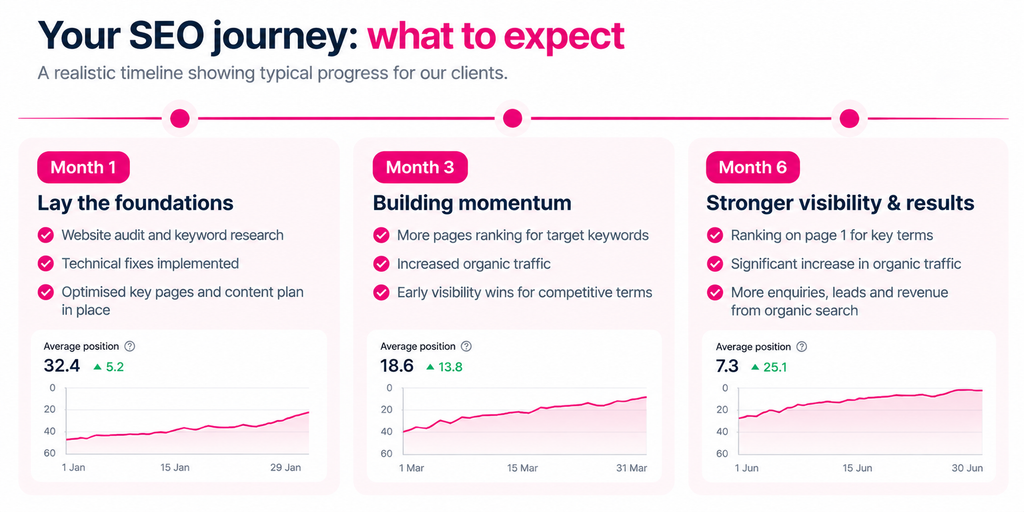
SEO tends to suit businesses that are playing a longer game and have the patience to let the work compound. if you need enquiries immediately, it is rarely the right fit. But it becomes very hard to compete with once it is established.
You are likely a good fit for SEO if:
- Customers search regularly for what you offer, not just once in a blue moon
- You operate in a defined local market, and you want to own long-term
- You want visibility that does not disappear the second you stop paying for it
- There are genuinely useful topics you can build content around for your customers
- You can commit to a budget and patience over several months rather than days
When Does PPC Make Sense for Your Business?
PPC earns its keep when speed and control matter more than longevity. It is the more predictable option when you need to know, almost to the pound, what a lead costs you. If immediate enquiries and clearer cost control matter most, PPC is the stronger fit.
You are likely a good fit for PPC if:
- You need enquiries in the next few weeks, not months
- There is strong buying intent behind the searches you want to target
- You already know, or can find out quickly, which searches actually convert
- Your margins comfortably absorb the cost of advertising
- You want to test whether demand for a new service exists before investing further
Can You Run SEO and PPC Together?
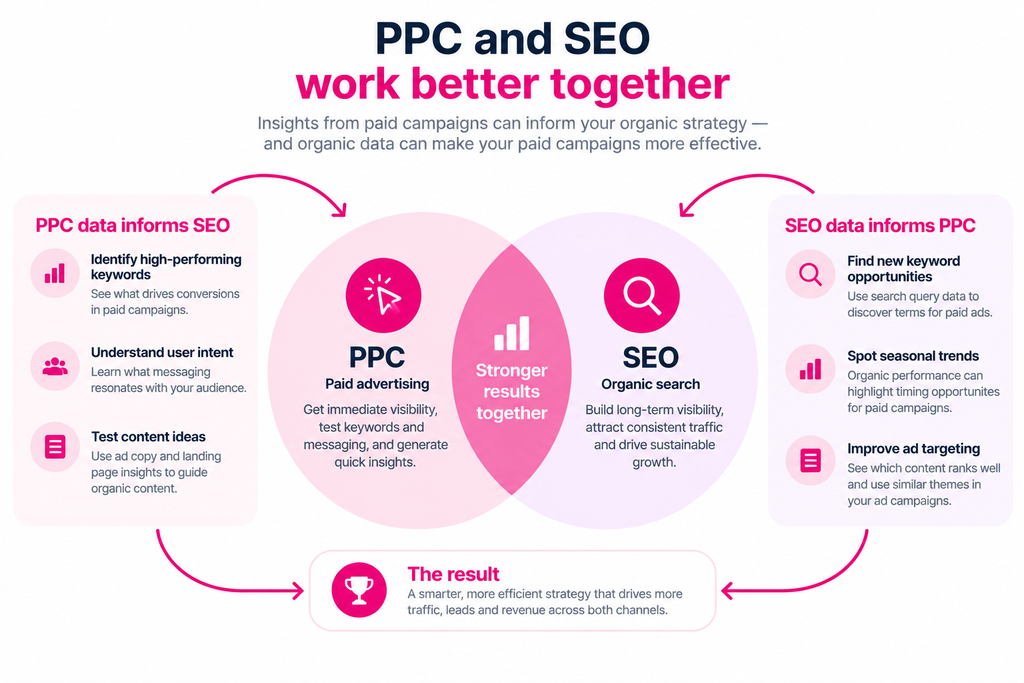
SEO and PPC do not have to fight over the same budget or the same attention, and in practice, they often work far better as a pair. PPC fills the visibility gap while your organic rankings are still built in the background, so you are not left with a quiet phone for the first six months. Search and conversion data from a Google Ads campaign can also point you toward which keywords are worth building SEO content around. The reverse works just as well.
Norwich and Norfolk trade businesses tend to see strong results from this blended approach, since local competition often means, you cannot afford to wait out a purely organic strategy.
image
How Do You Decide Between SEO and PPC?
If you are still weighing this up, run through these three questions honestly before committing budget anywhere. That will help you choose the option that fits what you need now, instead of guessing and hoping for the best.
Question What to consider
| Question | What to Consider |
| How quickly do you need results? | Now, versus visibility that builds over several months |
| How valuable is a new customer to you? | Your margin and whether it comfortably supports advertising costs |
| How competitive is your market? | The time and budget are realistically required to compete, whichever route you take |
There is no universally right answer here. There is only one answer that fits where your business is right now, which is exactly why generic advice rarely helps.
Who Is Smash Marketing and Why Should You Trust This Advice?
Smash Marketing is a Norwich-based digital marketing agency working across SEO, PPC, web design and automation for businesses throughout Norfolk and Suffolk, from trades and professional services to local retail. Every campaign is delivered in-house by the same people you speak to, rather than handed off to an outsourced team you never meet. That matters because the strategy behind your SEO vs PPC decision should come from the people managing your account, not from reading a script.
The team includes specialists across SEO, Google Ads, content and marketing automation, and the agency has been trusted by organisations including Norfolk County Council, Citizens Advice Diss and Thetford, and Rackheath Vets, alongside a broad base of independent local businesses. Results are reported monthly, in plain English, with no long-term contracts tying you in. The goal has always been to earn continued trust through outcomes rather than paperwork.
If you want to see what an ongoing SEO management programme involves, or how Google Ads management is structured for local businesses, both service pages set out exactly what is included and what it costs. You can also browse real client results to see how this has played out for businesses like yours.
So, SEO vs PPC: Which Should You Choose?
Do not ask only, “Is SEO better than PPC?” That question does not have a universal answer, and anyone who gives you one without asking about your business first is guessing. Ask instead what your business needs right now, which searches matter most to your customers, and what you can realistically commit to, whether that is time, budget or both.
If you are still unsure which direction fits, that is exactly the conversation worth having before you spend another pound guessing. A combined SEO and PPC marketing package is often the simplest starting point if you want immediate ad visibility while your organic presence builds beneath it.
Want a clearer picture of where your website currently stands?
Get a free SEO site audit and find out exactly what is working, what is not, and where the opportunity lies for your business, whether that turns out to be SEO, PPC, or both together.